
Art History Graduate Students
Current Graduate Students
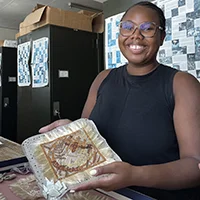
Sarah Brokenborough is a PhD student in Art History and Latin American Studies at Tulane University. Her research focuses on the art and material culture of the African diaspora in the Americas. Her dissertation situates nineteenth-century Jamaican arts and crafts within broader transnational histories of African diasporic art and botanical exchange in the Atlantic world. She earned her MA in the History of Art at The Courtauld Institute of Art, and her MA in Latin American Studies at Georgetown University, and her BA in Comparative Women’s Studies at Spelman College.
Margaret Brown is an MA student in Art History at Tulane University. Focusing on works of transportable microarchitecture, Margaret aims to interrogate the survival of gothic architectural language during the transition from medieval to modern times across Europe. Her selected objects range from liturgical to secular, including wearable pieces. She is part of the school’s 4+1 program, beginning her master’s work while still an undergraduate at Tulane. Margaret looks forward to continuing her formal training under the guidance of Professor Leslie Geddes and the rest of the Art History Faculty in New Orleans!
María Carrillo Marquina is a PhD student in Art History and Latin American Studies at Tulane University. She focuses on the art and material culture of the African diaspora in the Spanish Americas with a particular interest in Afro-Latino artistic and religious expressions in colonial Mexico and Cuba. By investigating the visual culture of Black confraternities, she aims to nuance the understanding of Afro-Catholicism and broaden the existence of art in colonial Black communities. María earned her Master of Arts in Art History at the University of Delaware and her Bachelor of Arts in Art History and Arts Management at the College of Charleston Honors College.

Kaillee Coleman is a PhD student in Art History and Latin American Studies at Tulane University. Her research focuses on contemporary Caribbean art and cultural production, with special emphasis on the Black Atlantic and diaspora studies. From 2021-2022, she was the recipient of U.S. Dept. of Education Foreign Language and Area Studies (FLAS) Fellowship in Haitian Creole. Additionally, she was the 2022-2023 recipient of the William J. Griffith Award for Outstanding Teaching Assistant in Latin American Studies, awarded by the Stone Center for Latin American Studies at Tulane University. Her ongoing dissertation project is entitled “When I Am Not Here, Estoy Allá: Visualizing Expansive Space-Time in Caribbean Diasporic Memory.” She earned an MA degree in Latin American Studies from Tulane University and BA degrees in Art History and Interdisciplinary Art (specializations in Visual Art and Theatre) from Seattle University.
Tihitina Dagnachew is an M.A student in Art History specializing in Italian Renaissance art with a focus on visual culture of the Vatican Palace. Her research analyzes the late artistic productions of Michelangelo’s paintings in the Pauline Chapel through the lens of liminality to explore themes of spirituality, transformation, and change. Ultimately, she hopes to demonstrate how art and architecture converge to reify papal authority amid the Counter-Reformation. She received a BA in Sociology from the University of Virginia and was a Hot Metal Bridge Fellow in the History of Art and Architecture Department at the University of Pittsburgh.

Margot Drewyor is an M.A. student in Art History at Tulane University and a member of the Creative Premedical Scholars Program through the Tulane Medical School. Her research draws upon her premedical background to analyze Renaissance anatomical drawings and prints. Her research interrogates the relationship between art and medical/anatomical knowledge during the Renaissance, with a specific focus on Leonardo da Vinci and Andreas Vesalius. She is a part of the school’s 4+1 master's program, beginning her master’s coursework during her undergraduate career. Ultimately, she hopes to show how dissections and other forms of anatomical study influenced the art of the Renaissance. Margot looks forward to continuing her formal training under the guidance of Professor Leslie Geddes and the rest of the Art History Faculty in New Orleans before transitioning to medical school.

Xena Fitzgerald is a PhD candidate in Art History and Latin American Studies at Tulane University. Xena’s research addresses the intersections of visual art and performance in the Viceroyalty of Peru during the seventeenth and eighteenth centuries with a focus on the Society of Jesus. By investigating how Jesuits in Peru mobilized sculpture and other objects to promote their local and global missionary ambitions, Xena’s dissertation project advances an interdisciplinary approach to object mobility in the context of early modern performance. She earned her Bachelor of Arts in Art History from Grinnell College and her MA in art history from SMU.
Born in Manila, Philippines, Claire Justin Fontaina received her bachelor’s degree in Art History and Spanish from Saint Louis University, Missouri. She studies colonial Philippine visual culture during the Spanish regime and its connections to New Spain. By investigating the Sangley production of retablos and its visual hagiographies, she hopes to broaden the understanding of its material culture and movement during Manila’s Early Modern Period. Claire was recently awarded the Publicly Engaged Scholar Fellowship by Tulane’s Center for Public Service. Here, she aims to bring her work as an academic scholar to her beloved community through an arts public program catered to the Filipino youth in the Chicagoland area.

Kayla-Marie Golden is a recent Spelman College graduate from Charlotte, NC, who works at the intersection of Africana studies, fashion history, and the study of visual and material culture. Kayla will continue her academic journey as an inaugural member of Tulane’s Crossroads Cohort, pursuing a Master of Arts in Africana Studies and Art History. After completing her studies at Tulane, she plans to work as a museum curator organizing exhibitions highlighting the work of Black fashion designers and advocating for art museums to collect it and other objects related to African American dress history. In addition to earning a Bachelor of Arts in Art History with minors in Writing and Curatorial Studies at Spelman, Kayla received multiple scholarships and honors, including the Art History Scholarship, the Dovey Johnson Roundtree Scholarship, and membership in the Alpha Lambda Delta Honor Society. Kayla has actively engaged with the art world through immersive travel, internships, and academic programs. She participated in the Bard Graduate Center’s intensive course Re-Dress and Re-Form: Innovations in the History of Fashion and Design in New York and traveled to Paris for NYU’s Black Portraitures Conference as part of the AUC Art Collective’s “Art Insider” program. Her professional experience includes curatorial research at the Museum of Fine Arts, Boston, where she assisted with exhibition planning and collection development, and art appraisal work at the Children’s Defense Fund where she cataloged over 300 pieces of African art. Kayla also served as a student curator for the AUC Art Collective exhibition at the Robert Woodruff Library and founded Artistically Her, a blog highlighting women in the arts.
Clare Gucwa (she/her) is a writer, educator, museum professional, and a first-year PhD student in the Art History and Latin American Studies program at Tulane University. She completed her Bachelor of Fine Arts degree in Studio Art at Ohio University and her Master of Arts degree in Modern and Contemporary Art, Criticism, and Theory at the State University of New York, Purchase College. Clare has held curatorial roles in art, history, and science museums where she completed projects that increased access to art historical research on the construction of public art and public space within institutions. Her research interests include Latin American art of the twentieth century, Indigenous art, performance studies, and public practice. Her current research explores public art and performance in El Salvador and questions how collective spaces shape ideas and categories of art and artifact.
Nicole Jozwik is a PhD student in Art History and Latin American Studies at Tulane University. Her research focuses on the art and religion of the colonial Andes, specifically in Peru and Bolivia. She is currently pursuing research on the art and culture of colonial mitayo mining communities in Potosí, Bolivia. Nicole earned her Bachelor of Arts in Art History at Providence College. She received her Masters in the History of Art at the Pennsylvania State University. Nicole also received Quechua language and culture instruction from Centro Tinku, Cusco and the Ohio State University.
Jonah Goldman Kay is an MA student in Art History at Tulane University. His research focuses on social and material histories of photography in the American South, with a particular emphasis on race and migration. He also maintains an active writing and curatorial practice. Prior to joining Tulane, he was a researcher at Hauser & Wirth. He received a BA in Art History from Columbia University and a BA in Modern Jewish Studies from the Jewish Theological Seminary.
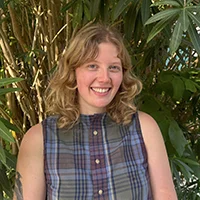
Hope Mutter is an MA student in Art History at Tulane University. Her research centers on the art of the colonial Andes with a specific interest in the material culture of performance in late colonial and republican Peru. Her master’s thesis investigates handheld objects used in the danza de negritos and their role in negotiating social dynamics within highland Peruvian communities during the 19th century. Hope earned a BFA in Studio Art and a BA in Art History from UNC Chapel Hill. In the summer of 2026, she studied Quechua language and culture in Cusco at ACUPARI.
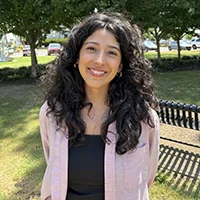
Sophie Otero is an MA student in Art History at Tulane University. She earned her bachelor’s degree in Art History in 2021 from Brown University. While at Brown, she created an online exhibition, “or whatever I call myself”, which mapped a narrative of regional Mexican and Mexican-American identities and their influences, spanning from the pre-Columbian period to the present day. Since graduating, Sophie has held positions first at a Texas auction house and then as a curatorial assistant to the Windgate Curator of Craft (2024-2025) and the curator of Indigenous Art at Crystal Bridges Museum of American Art (2024-2026). At Tulane, Sophie hopes to study Indigenous art in Latin America, focusing on how Indigenous artists engage with art to address issues such as environmental sovereignty, economic pressures, migration, memory, and shifting identities.
Carolina “Lina” Pacheco-Colón is an MA student in Art History at Tulane University. She pursues research focused on art’s interaction with French colonialism in the Caribbean and Africa in the 18th and 19th centuries, with a particular interest in Creole artists working in France and depictions of Creole subjects. Through her studies, she analyses the reproduction of colonial paradigms and the construction of racial and cultural identities in painting. Her work also examines representations of gender and the female body’s role as a conduit for colonial ideologies of conquest and desire. Prior to joining Tulane, Lina earned a B.A. in Art History and French from Williams College.
Caroline Rodrigues Alves was born in São Paulo, Brazil. She received her bachelor’s degree in Architecture and Urban Planning from the Universidade Estadual de Campinas (Unicamp). Before joining Tulane, she conducted research on how architectural journals shaped the development of modern architecture in Brazil during the 1930s. For her master’s thesis, she investigates how architectural pedagogy contributed to the shaping of public space in 1930s Rio de Janeiro, examining the intersections of architecture, gender, and politics.

Born in Bogotá, Colombia, Maryluna Santos Giraldo received her bachelor's degree in History from Universidad Católica Argentina, located in Buenos Aires. In 2023, she finished her master's degree in Art History at University College London. This followed her initial master's degree in Art History from Universidad de Los Andes in Bogotá, Colombia, in 2020. She is currently a PhD Student at Tulane in Art History and Latin American Studies, where her doctoral research focuses on tracing the Indigenous and Black communities’ presence in the architecture that has been traditionally characterized as Mudéjar.

Tiffany Sims is an M.A. student in Africana Studies and Art History and an inaugural member of the Crossroad Cohort. Her research draws upon her dance background as a way to analyze the historical narratives of the Black body in the African diaspora, as well as a way to center embodiment in histories of modern and contemporary art. Through the lens of Black feminist theory, she considers questions that expand upon gesture, movement and memory, race, and racism in order to call attention to artists and performers whose work on the body emphasizes the political dimensions of Blackness. Before coming to Tulane, Tiffany earned an AA from Broward College and a BA in Art History from the University of Florida, Gainesville. She was a Hot Metal Bridge Post Baccalaureate Fellow in the Department of History of Art and Architecture at the University of Pittsburgh. Most recently, Tiffany served as the Margaret Powell Curatorial Fellow at Carnegie Museum of Art from 2022–2024.
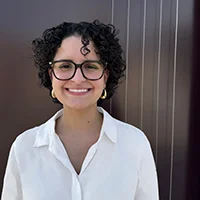
Carol Velandia received her bachelor’s degree from the University of Florida in Art History and Political Science where she developed a keen interest in Latin American studies. Inspired by her research as an intern at The Metropolitan Museum of Art, her thesis focused on Mexica (i.e., Aztec) labrets, a small yet powerful lip ornament that communicated status and honor. Through the deliberate production of labrets in the shape of open-beaked eagle heads, she analyzed how Nahua wearers symbolically possessed an eagle’s inimitable shrieking cry, metamorphosizing the object into an animate piece of jewelry that blended sight and sound. She intends to carry forth her research at Tulane and study the influence of Nahua senses on body ornaments, expanding the interpretation of these objects as living, multisensorial creations.

Fei Xie is an MA student in Art History at Tulane University. Her research focuses on the silk production and circulation of Manila Galleon trade in the sixteenth and seventeenth centuries. By centering the materiality of silk in a global framework, she hopes to explore the lesser known transoceanic connection between colonial Latin America and the Pacific through the lens of objects. She is also interested in navigating the role of women in this trade, which manifests in transnational ways of patronage, artisanal and intermarriage. Fei earned her Bachelor of Arts in Philosophy and English Literature Studies at St. John’s College.
Recent Alumni
Camila Aguayo received an M.A. in art history from Tulane in 2026 with a thesis titled, “Reframing a “Master”: Race and the artistic legacy of José Campeche.” She studies colonial Caribbean art with a focus on the visual culture produced on the island of Puerto Rico during the Spanish regime. Through her research, she has focused on the intersections of race, class, and identity, exploring how colonial legacies influenced artistic practices and the formation of different sociocultural narratives. By examining artworks produced within the colonial structure of Puerto Rico, she observes the role artists played in forging a national identity and creating a new visual culture for the island. Camila was recently a Hot Metal Bridge Fellow in the Department of History of Art and Architecture at the University of Pittsburgh, where she had previously graduated and received a B.A. in Art History and a B.S. in Marketing.
Hailee Corbin received an M.A. in art history from Tulane University in 2026 with a thesis titled, “Materializing the faith: Nahua Christianity in two colonial Mexican liturgical objects.” She earned her bachelor’s degree in the History of Art and Architecture from the University of California Santa Barbara. During her time at UC Santa Barbara, she began taking courses on Latin American Art, specifically that of precontact Mesoamerica and colonial Mexico. Her senior thesis explored the role that the systematic study of nature played in crafting early colonial liturgical objects, particularly in the well-known Hearst Chalice. Examining this object, and objects like it, brought to light how Nahua knowledge of the natural world became intertwined with Christian spiritual knowledge to advance Christianization efforts. She hopes to examine how these epistemological traditions influenced the development of a distinctly Nahua Christianity and how the development of this faith tradition changed art-making practices and the meaning of materials in colonial Mexico.

Ada Evans received her M.A. in Art History at Tulane University in 2024, with a thesis titled “Art of Waning Spaces: The Role of Materials in Imagining Coastal Climate Change.” She centers her research on contemporary eco art, exploring how climate instability and large-scale ecological systems can be visualized through artistic practice. Her master’s thesis focuses on contemporary eco art engaged with oceanic climate change and investigates the role of organic materials in imagining sea-level rise and coastal land loss. By interrogating the role of eco art in the Anthropocene, she hopes to clarify the ways art can communicate complex climatic data, influence individual and collective behavior, and invoke an environmental ethic of reciprocity. Ada earned her Bachelor of Arts in Art History with a minor in Environmental Issues at Colorado College. She is currently a Ph.D. Candidate in History of Art and Architecture at Boston University.

Megan Flattley received her PhD in Art History and Latin American Studies from Tulane in 2024 with a dissertation titled, “Out of the Fragments, New Worlds: Spatial and Social Construction in the Work of Diego Rivera, 1913-1933.” Her dissertation centers on the pictorial and architectural space of the murals of Mexican artist Diego Rivera and its relation to both the pre-Conquest Mexican artistic tradition as well as to international discourses of revolutionary art in the 1920s and 1930s. At Tulane, Megan completed the two-year Andrew W. Mellon fellowship in Community-Engaged Scholarship, the result of which was her contribution to the Newcomb Art Museum's 2019 exhibition, Per(Sister): Incarcerated Women in Louisiana. She has published in the Journal of Curatorial Studies, the Social Enterprise Journal, Latin American and Latinx Visual Culture, and the public humanities site Smarthistory. She is currently a Forsyth Postdoctoral Fellow of Latin American Art at the University of Michigan, Ann Arbor.
Claudia González-Díaz received an M.A. in art history from Tulane University in 2026 with a thesis titled, “More than a tool: Puerto Rican machetes and their adherent meanings, 1940s.” She studies contemporary art that addresses the intersections between U.S. imperial politics and land transformation. At Tulane, she wishes to explore material culture theory to better understand how artists incorporate the materials derived from (un)natural disasters into their artwork. Claudia aims to root her analyses in lessons from diasporic Latinx Studies and Black Studies. She has completed internships at the National Portrait Gallery and Museo de Arte de Puerto Rico and has curated two group exhibitions, Home Bound (2023) and Record(ando) (2023). She graduated from Indiana University Bloomington in 2023 with B.A.s in Art History and French and a minor in Latino Studies.
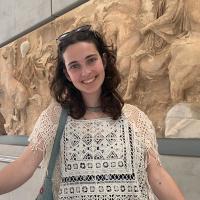
Tali Gorodetsky received her M.A. in Art History from Tulane University in 2024, with an M.A. thesis titled, “Silver threads: Dutch domestic objects during the colonial transition from New Netherland to New York.” Tali’s thesis focused on the persistence of Dutch cultural traditions following the transfer of colonial power from Dutch New Netherland to English New York. By comparing colonial estate inventories between 1650 and 1710 CE, Tali hoped to highlight the often-forgotten legacy of Dutch craftsmanship in colonial American decorative arts of the Northeast. Tali also earned her Bachelor of Arts degree in Art History and International Relations from Tulane University. Tali also attended the Institute of Cultural Heritage, International Law, and the Arts in Siena, Italy in conjunction with Tulane Law School.
Marjorie Kennedy received an M.A. in art history from Tulane University in 2025 with a thesis titled, ‘The astratto paintings of Piero di Cosimo.” Her primary research focus is the Italian Renaissance, examining the influence of intellectual and artistic movements on themes and pictorial devices in painting. Her undergraduate research considered Piero di Cosimo, and his influence on the Italian Mannerist movement. Her master’s thesis expands her study of Piero di Cosimo’s work in relation to humanism, religion, and alchemy. Through an investigation of this interplay, she hopes to foster a greater understanding of Piero’s unique imagery. Marjorie earned her Bachelor of Arts in Art History & Criticism with a minor in French at Webster University.

Elena Banafshe Johnson received her M.A. in Art History at Tulane University in 2024, with a thesis titled “Continuous threads: Structure-privileging and Andean thought in We Are Seven.” She is interested in technical art history, craft theory, and issues of access. Elena has a BA in Comparative Languages and Linguistics with emphasis on Latin and Spanish from Earlham College.
Katie Margerison received an M.A. in art history from Tulane University in 2025 with a thesis titled, “Aesthetics of the national body: Visual culture and physical education in post-revolutionary Mexico.” Her research focuses on the social history of modern art in the Americas, with a specific interest in the dynamics of identity and cultural formation in post-revolutionary Mexico. Her work examines topics such as official culture and heritage production, museological practices, colonial legacies, global Modernist networks, and Avant-Garde movements. Katie earned her B.A. in Art History and Museum Studies at New College of Florida.

Cecilia Nogueira received her M.A. in Art History from Tulane University in 2024, with an M.A. thesis titled, “Through the eyes of Salvator Rosa: Refuting the romantic interpretation through an analysis of the artist’s personal correspondence and philosophical inquiries.” Her thesis focuses on Rosa’s self-portraits, figural landscapes and figural paintings, exploring their connection to Stoic philosophy and the artist’s personal accounts. By analyzing Rosa’s corpus through this lens, she rejects the eighteenth-century Romantic interpretation of his paintings. Cecilia earned her Bachelor of Arts degree from Tulane University with a major in Art History and a minor in Economics.

Catherine Nuckols received her PhD in Art History and Latin American Studies from Tulane in 2024 with a dissertation titled, “Unfolding the sign: Iconicity and figuration in Maya full-figure inscriptions.” Catherine’s dissertation focuses on full-figure hieroglyphic writing of the ancient Maya during the eighth century CE, examining how these inscriptions exemplify both linguistic content and visual complexity. By investigating the ways in which art and writing intersect, she hopes to advance understanding of Maya visual culture as it reflects in hieroglyphic writing. Catherine earned her Master of Arts in Art History at the University of Texas at Austin and her Bachelor of Arts in Latin American Studies at Brigham Young University. She currently holds the Sylvan C. Coleman and Pam Coleman Memorial Fund Fellowship at the Metropolitan Museum of Art, New York.
Aine Powers received an M.A. in art history from Tulane University in 2026 with a thesis titled, “Les femmes de province: Considering Gustave Courbet’s representation of rural femininity.” Aine graduated from Middlebury College in Middlebury, Vermont where she majors majored in Art History and Global Security Studies. She is interested in artistic production under non-democratic governments, particularly in Europe during the 19th and 20th centuries. Her undergraduate thesis focused on re-interpreting The Wheat Sifters by Gustave Courbet as a political allegory of peasant inaction under the regime of Napoléon III in France. She is also passionate about museum work.
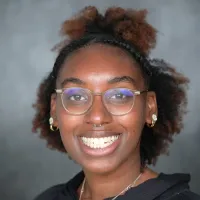
Daniella Statia received her M.A. in Art History at Tulane University in 2024, with a thesis titled, “Searching for an African American artistic identity...in Mexico?: The art of Hale Woodruff, Elizabeth Catlett and Sargent Claude Johnson.” She focused her research on Blackness and Indigeneity in Modern art of the Americas, specifically examining the intersectionality and exchange between the two communities. Her master’s thesis investigates an instance of this exchange, where three Black North American artists traveled to Mexico in the 1940s during Mexico’s Public Art movement. Daniella earned her Bachelor of Arts in Art History and Spanish Studies at University of Delaware.