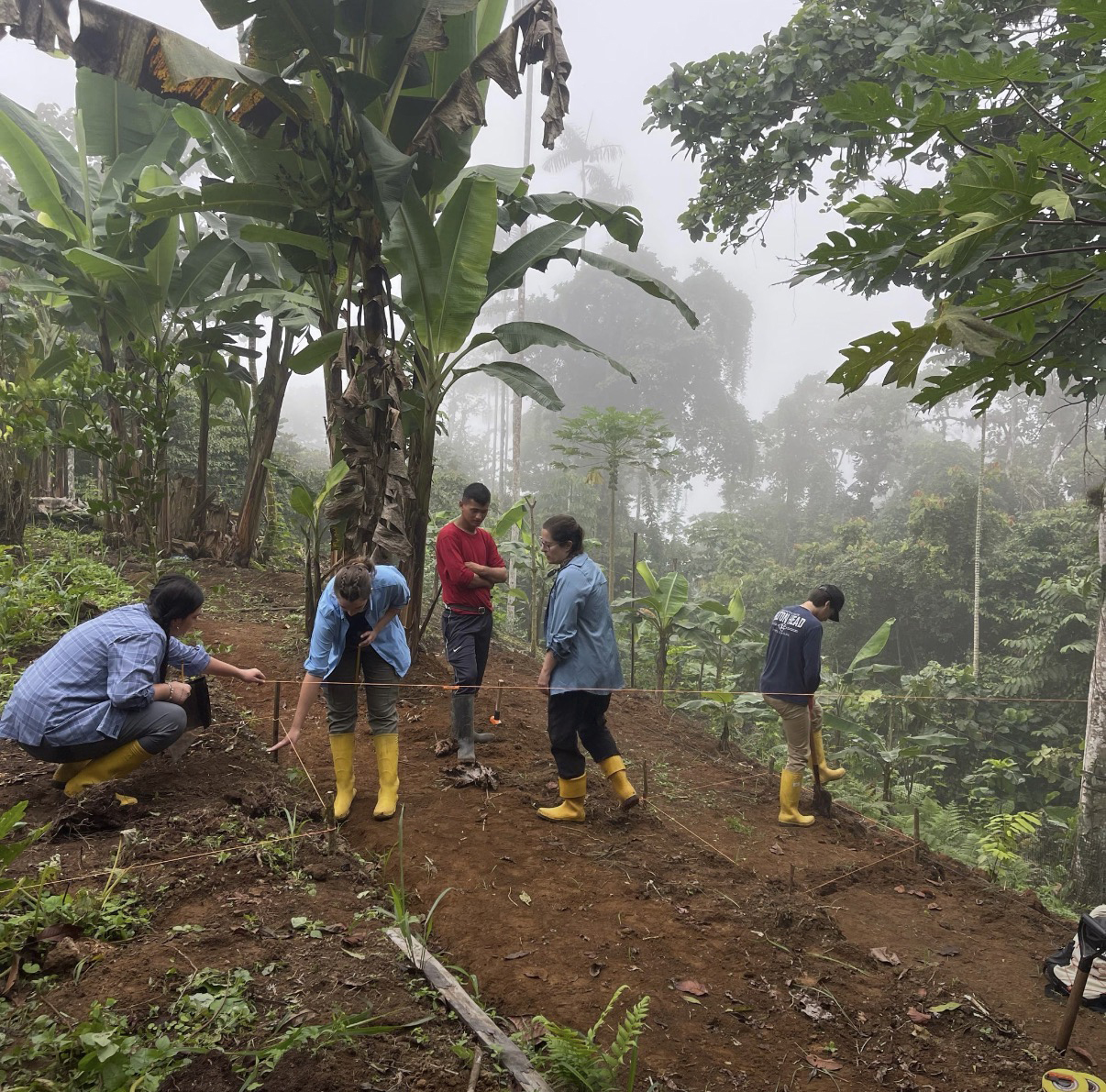
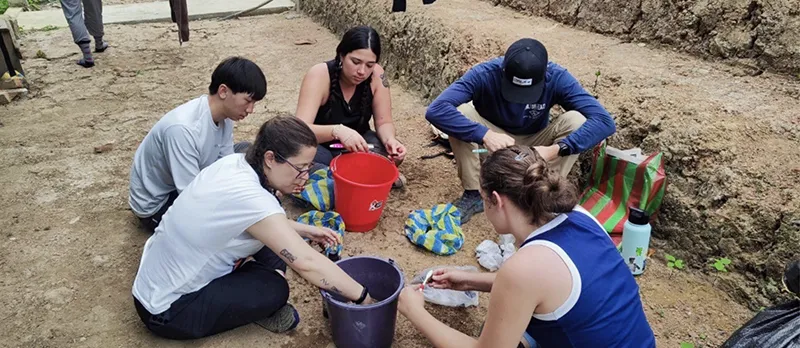
When I applied to Tulane’s summer TIERA Program, I expected to gain archaeological field experience. What I gained was so much more. Thanks to an award from the Anthropology Department’s Kenneth J. Opat Fund and a School of Liberal Arts scholarship, I was able to participate in this incredible opportunity. During my time at the Fundación para la Conservación de los Andes Tropicales (FCAT), I learned that research depends just as much on the people conducting it as it does on the discoveries themselves.
Located in Ecuador’s Chocó region, FCAT is more than a research station. It is a center for conservation, education, and community-based research. Scientists at FCAT work year-round alongside local communities to protect the rainforest while studying ecology, reforestation, and conservation. Many of the researchers and staff members are from the surrounding region, meaning we learned from people whose understanding of the landscape came not only from scientific training but also from generations of lived experience. That perspective made the program unlike any academic experience I have had.
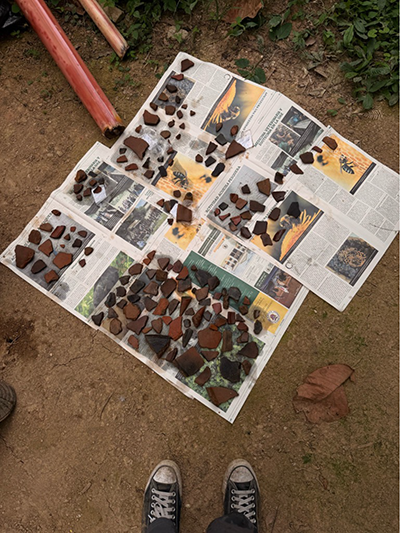
As part of the archaeology team, I participated in surveys, excavations, artifact identification, and cataloging while studying evidence associated with the Jama-Coaque culture, an advanced pre-Columbian civilization that thrived on Ecuador's northern coast. For my final research project, I examined the lithic artifacts recovered from the site, particularly obsidian. Because obsidian is not naturally found along Ecuador’s coast, its presence suggests long-distance exchange between coastal Jama-Coaque communities and populations living in the Andean highlands. Working with these artifacts showed me how even the smallest discoveries can help archaeologists reconstruct ancient trade networks and better understand connections between past communities.
One of the most rewarding parts of TIERA was its interdisciplinary nature. Although my focus was archaeology, I spent each day surrounded by students studying bird ecology, ethnobotany, water quality, and the cacao microbiome. Listening to their projects helped me appreciate how closely these fields are connected and how understanding the past also requires an understanding of the environments and communities that exist today. TIERA encouraged us to think beyond our own disciplines and recognize the value of collaborative research.
Life at FCAT extended far beyond our research projects. We shared meals with researchers, practiced Spanish, and participated in the routines of the station. The staff introduced us to everyday Ecuadorian traditions, teaching us how to play ecuavóley and cuarenta while sharing stories about the region and their communities. These moments helped us build genuine friendships and experience Ecuador beyond what we could learn in the fields. Rather than feeling like visitors, we became part of a community that welcomed us with generosity and a willingness to share both scientific knowledge and cultural traditions.
My time in Ecuador strengthened my archaeological skills, but it also reshaped how I think about research. TIERA and FCAT demonstrated that the most meaningful field experiences are rooted in collaboration, respect for local knowledge, and a commitment to both cultural heritage and environmental conservation. I returned home with new research skills, lasting friendships, and a greater appreciation for the people whose work makes programs like TIERA possible.