The School of Liberal Arts welcomed the Class of 2030 with a challenge: meet someone new, follow your curiosity and resist the urge to have everything figured out quite yet.
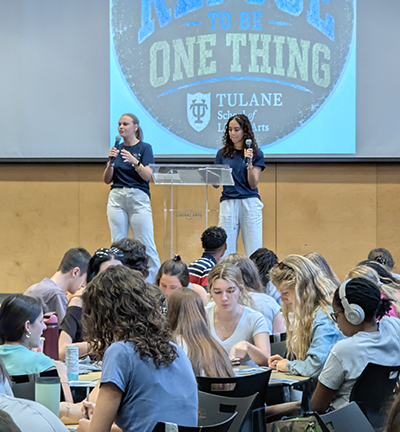
At the annual Dean’s Assembly and Open House, new students got their first taste of a community that stretches across 32 departments and programs and offers 92 majors and minors. But the morning began not with course catalogs, but with each other. Conversation cards, games and a student-led quiz show gave classmates plenty of reasons to talk to people they hadn’t met before.
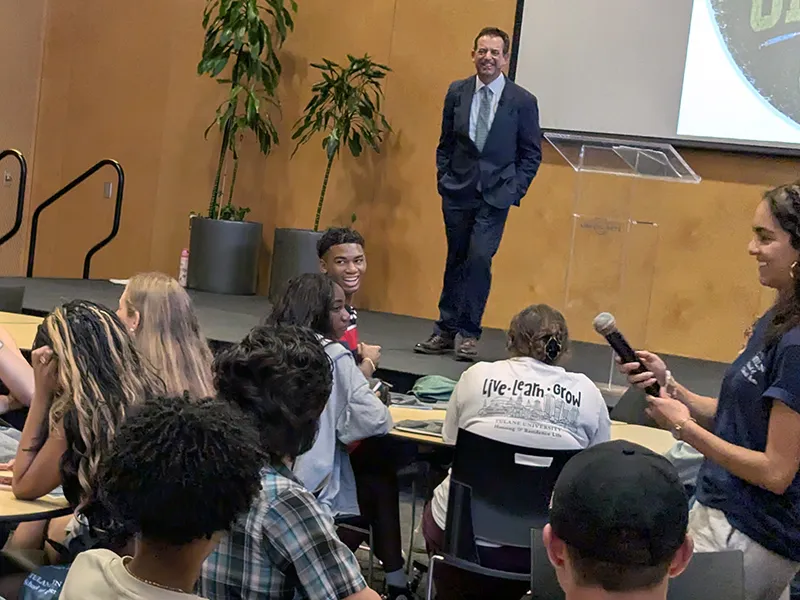
Dean Brian Edwards then invited students to think beyond one of orientation week’s most familiar questions: “What’s your major?”
“Universities are organized into departments. People rarely are,” he told the class, describing his own path from an intended economics major through courses in literature, languages, psychology, art history, studio art and playwriting before ultimately majoring in English.
Dean Edwards went on to explain, “Looking back, I wasn't getting distracted. I was getting educated. Many of you already understand that instinct. You may care about politics and music. Climate and history. Economics and visual art. Philosophy and neuroscience—you can do that here, have majors and minors in different schools. You may become deeply committed to one field without expecting it to account for your entire imagination. That does not mean you are unfocused. It may mean you are paying attention.”
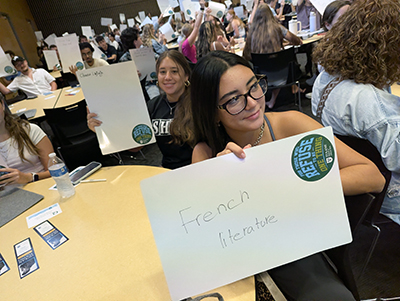
That spirit of exploration became tangible when students pulled out the whiteboards tucked into their SLA swag bags. Edwards asked them to write down something they were curious about, then raise their answers overhead. The resulting sea of questions offered a fitting portrait of a class just beginning to discover where its interests might lead.
Then it was time to explore.
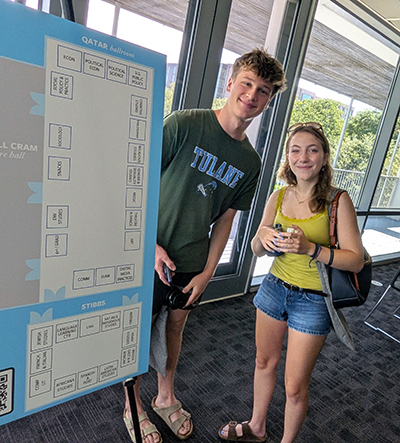
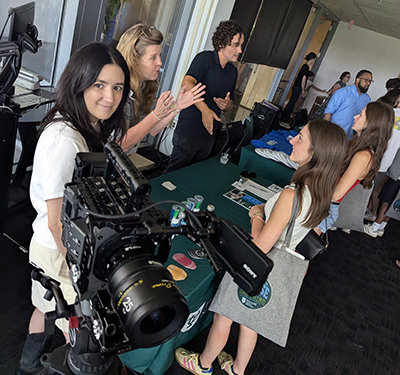
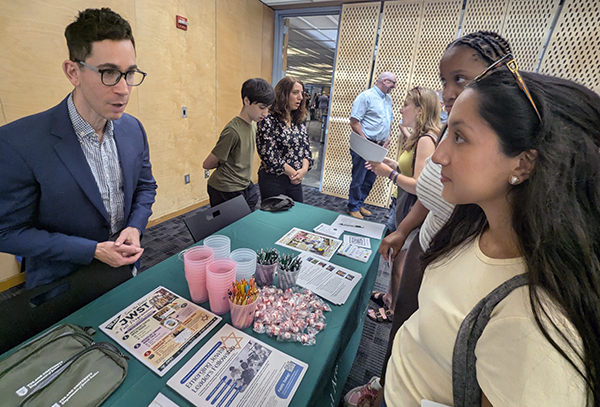
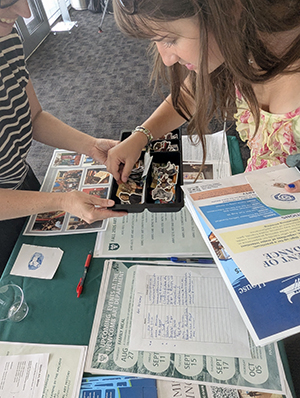
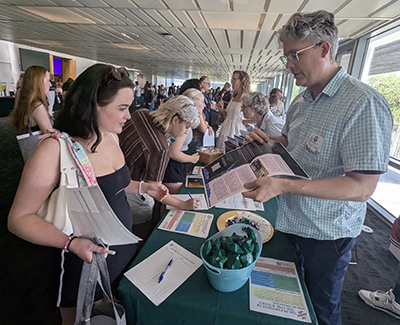
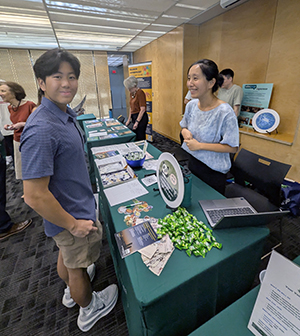
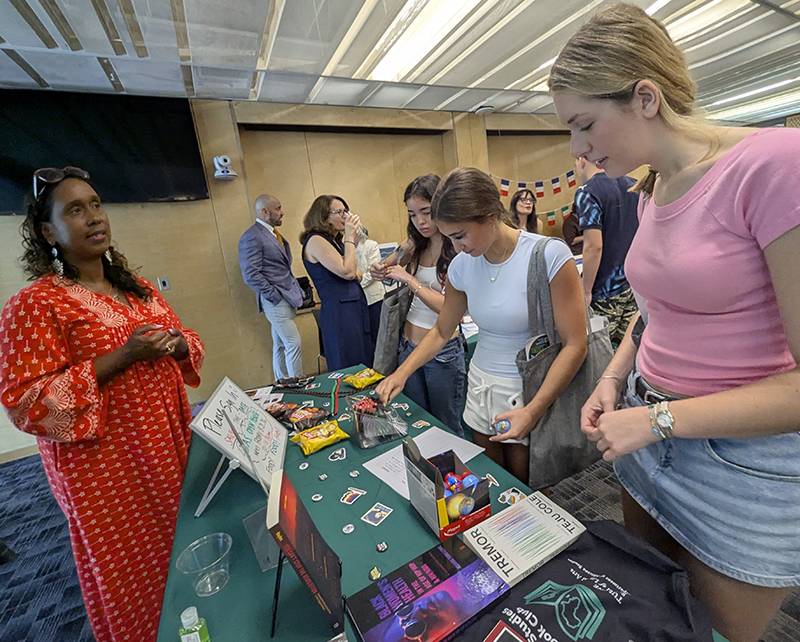
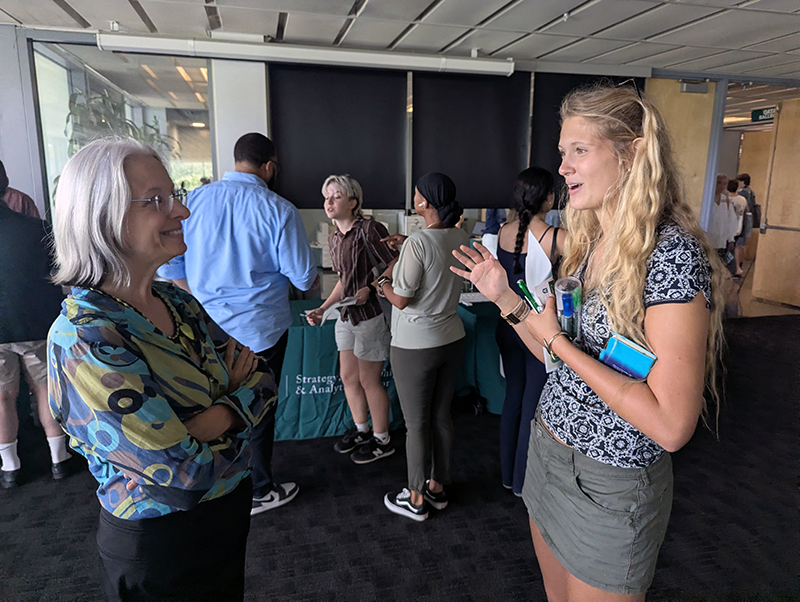
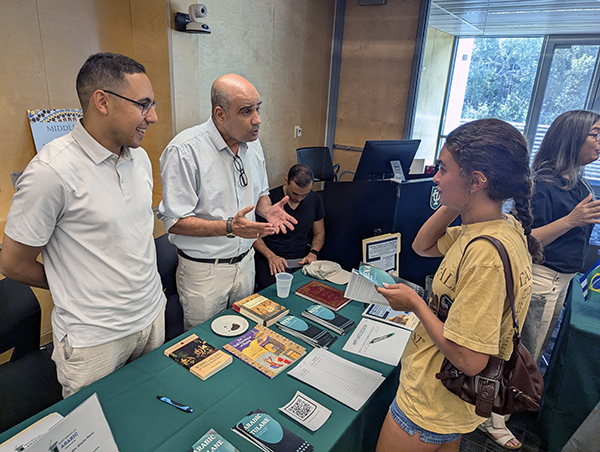
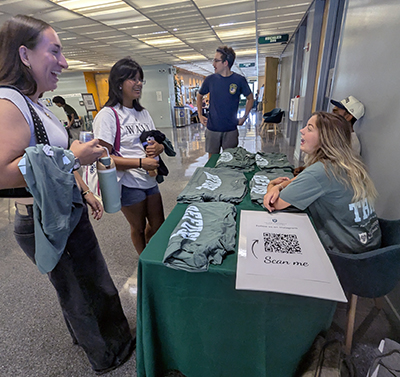
At the Open House, faculty, staff and current students filled the room with possibilities. Edwards encouraged students to begin with the tables they expected to visit, then find one they didn’t know existed.
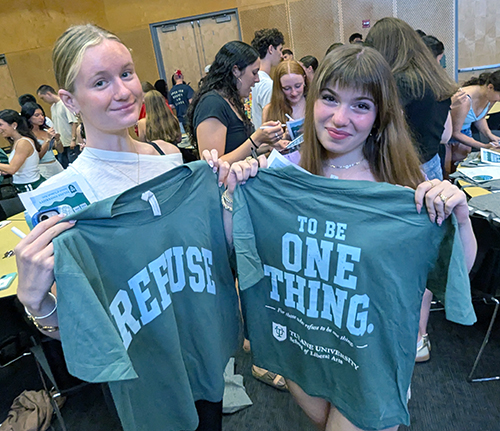
It was an invitation to approach college with curiosity rather than certainty, and to begin finding their place in a School, and a city, that refuse to be one thing.