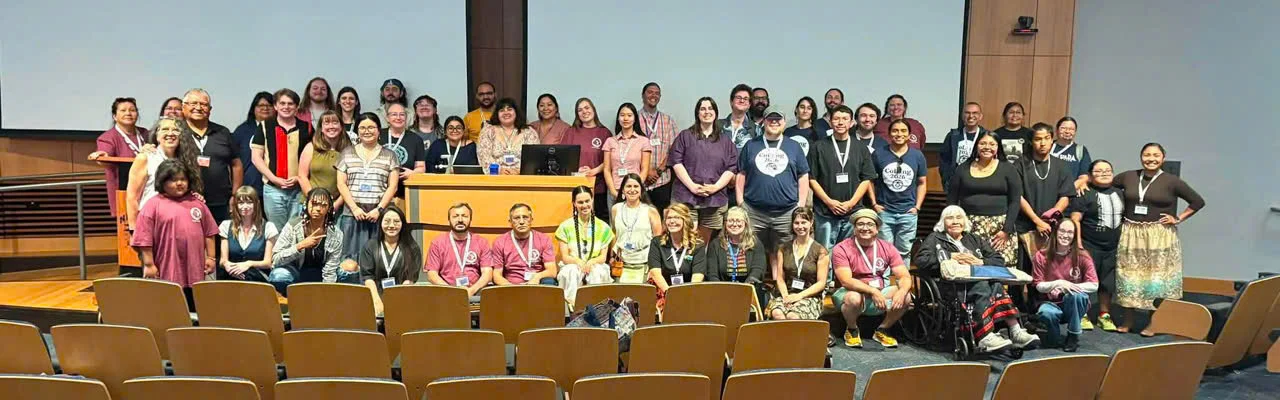
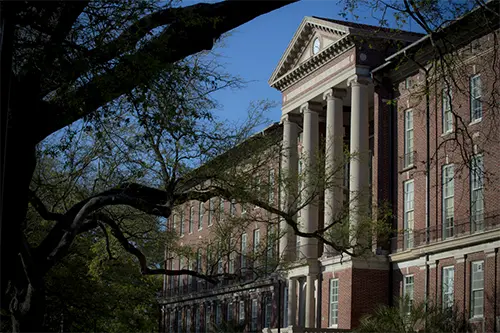
Under the summer heat, the University of Nevada, Reno campus was unusually quiet. The familiar movement of students between classrooms had slowed, but inside the university, in the Great Basin Hall, named to honor the geographic Great Basin region and the indigenous tribes of Nevada (Western Shoshone, Southern Paiute, Northern Paiute, and Washoe), there is another flock of students coming from all over the world, from Mongolia to America that is moving in.
It is CoLang 2026, a three-week workshop and practicum summer school organized by the Linguistic Society of America (LSA), focused on language documentation and revitalization of Native American languages and cultures. Members of the Nuwu, Newe, and Washoe communities had gathered at this land-grant university to share their languages with linguists and students, so that together they could work toward revitalizing them.
Ngoc Diep (Alice) was one of them.
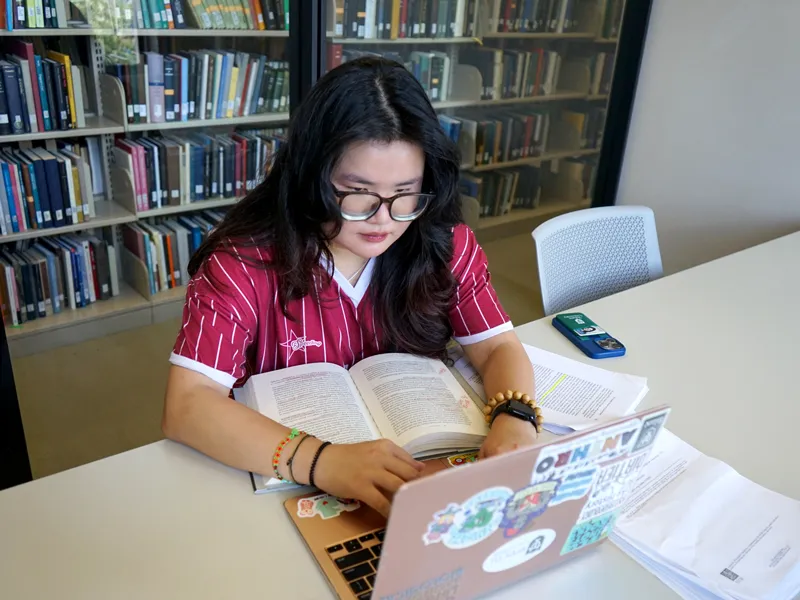
Alice is a Tulane School of Liberal Arts senior studying Linguistics, Anthropology and Philosophy, with a minor in Native American and Indigenous Studies. At Tulane, she became interested in language documentation and revitalization through the Linguistics and Anthropology programs and has been working with Mayan languages and some Native American languages, such as Choctaw and Biloxi, in Bulbancha, New Orleans, since her sophomore year. This summer, she received the Kenneth J. Opat Fund for Undergraduate Research in Anthropology from the Anthropology Department. This funding allowed her to travel to Reno to put her knowledge into practice and to gain hands-on fieldwork experience.
During the first two weeks, Alice completed eight intensive courses in FieldWorks Language Explorer (FLEx), automatic morphological parsing, ELAN transcription, Python for language documentation, and grant writing. These courses helped her to get hands-on knowledge of working in the fields, from collecting and transcribe recordings through ELAN, and bringing those works to public for preservation and revitalization, such as coding Python to sort the data collected and using FLEx to write dictionary.
“I was so surprised by how technical linguistic fieldwork could be,” Alice shared. “At Tulane University, I learned all the linguistic theories and methods on how to work with the language data, but I did not know how the data got into the scholars’ hands in the first place. Now I know, and I must say it was A LOT of work!”
In the program’s final week, Alice joined the Wá·šiw practicum, where she got one week to work with the teacher and community members of Washoe community to produce resources and materials for language revitalization. Together with Abby Boles of Arizona State University and Ella Roseborrough of Rice University, they formed a group, humorously named “Suffix Explorers,” where they developed a guide for ordering Wá·šiw verb suffixes, a resource that could be more accessible to language learners, attempting a contribution to language revitalization of Wá·šiw language. During that week, they spoke with and gathered language data from the elders of the Washoe Tribe and the teacher, Herman Filmore, who is also the Culture and Language Resources Director for the Washoe Tribe of Nevada and California. Over four days, hundreds of sentences were gathered, glossed, and analyzed to reconstruct the most logical and comprehensive way of ordering the suffixes. It turned out that one of the suffixes was out of date, two suffixes were overlooked and needed to be added to a new table, and dozens of order changes.
The Suffix Explorer practicum was a great success, but what Alice was the most proud of when packing her things to leave Reno was not their presentation, it was the feeling that she finally understood what the value of language work was, the community.
“CoLang helped me understand that as a linguist and anthropologist, community-based language work is not simply closing the door, sitting at the table, and trying to figure out the grammar,” Alice said. “We have to get out of your room, go to the elders’ house, listen to them talking about their histories, their language, and their community. And our language practice must respond to the priorities of the communities whose languages we study.”