
Biography
Maryluna Santos-Giraldo is a PhD candidate in Art History and Latin American Studies at Tulane University. Her dissertation examines the architecture of the New Kingdom of Granada between the 16th and 19th centuries. Her research repositions this territory as a center of production of new building practices and environmental adaptations shaped by the collective expertise of builders and architects. By focusing on the agents, materials, practices of making, and knowledge circulation, her work reconsiders labels such as “Mudéjar” often applied to early modern architecture in the Americas.
Project summary
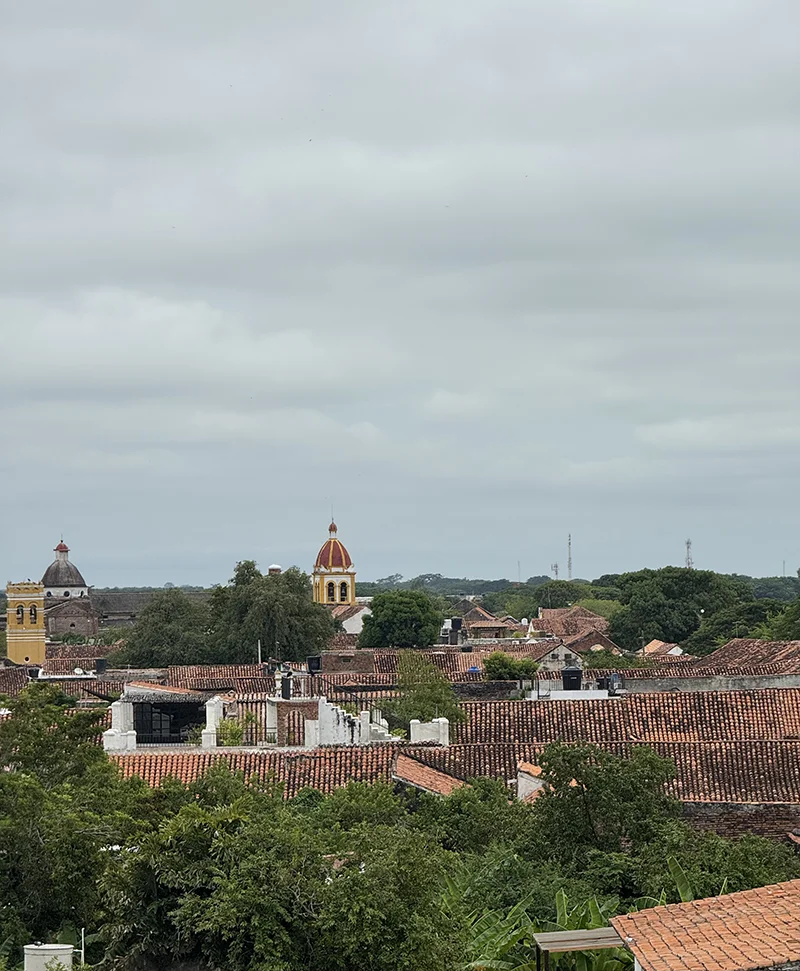
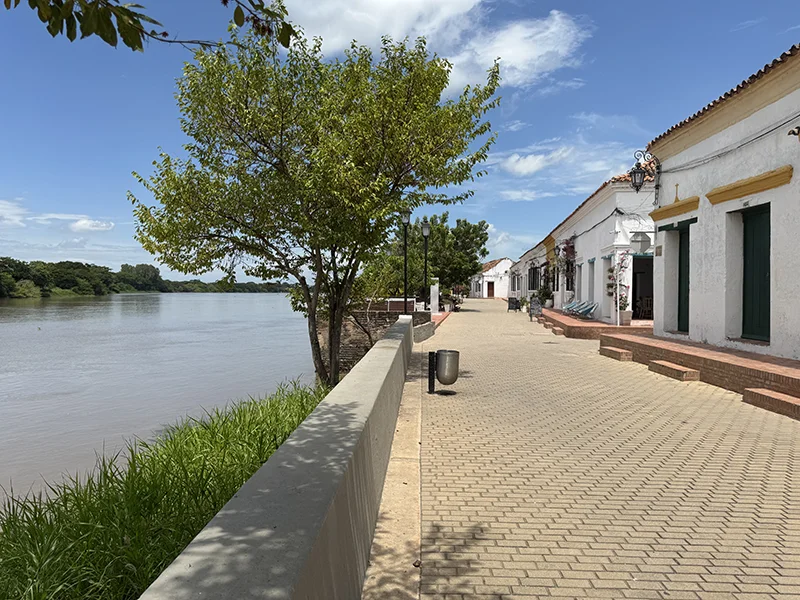
The New Kingdom of Granada was a Spanish colonial political division initially carved out of the Viceroyalty of Peru. It was never a stable or clearly defined territory; rather, it was a multiethnic and geographically diverse region that continually adjusted to shifting political circumstances. Within this territory, Mompox – a riverine city in the Caribbean region – served as the most important inland port during the colonial period. The city’s prominence transformed and shaped its built environment, propelling the construction of buildings that would define its urban landscape for centuries, and even into the present day. Among these structures, the Church of Santa Bárbara, initially built around 1613, reveals networks of knowledge circulating through printed architectural treatises, as well as the adaptation of building practices to locally available resources and environmental conditions.
This project investigates the material history, environmental vulnerability, and the dialogues between diverse early modern architectural knowledges that shaped the spatial order of colonial Mompox, as colonial global port city. Looking at the Church of Santa Bárbara as a case study, this research examines the materials and construction techniques employed in its building, alongside nineteenth-century visual representations, in order to better understand architectural practices in what has often been described as the “periphery” of the early modern Iberian empire.