Biography
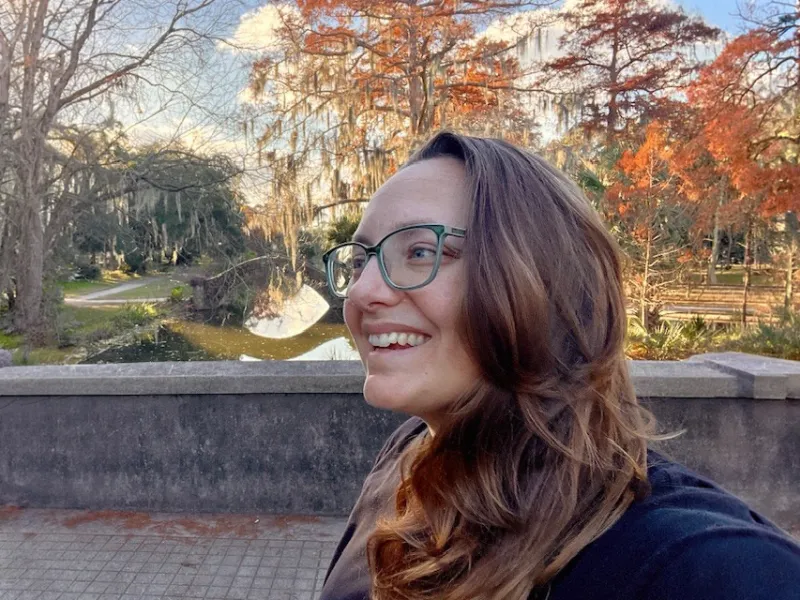
Eileen D. Tomczuk is a researcher and educator working in community-engaged historic preservation and spatial justice. Her work focuses on grassroots efforts to preserve and share the histories of marginalized groups and threatened landscapes in New Orleans and the Caribbean region. Eileen is a research assistant at the Phyllis M. Taylor Center for Social Innovation and Design Thinking and a board member for the LGBT+ Archives Project of Louisiana and The Faerie Playhouse. She received a 2026 LGBTQ+ Heritage Alliance Grant and was a Mellon Fellow in Community-Engaged Scholarship, 2022-2024. Eileen earned an MA in Museology from the University of Washington. She is pursuing a PhD in Urban Studies in the City, Culture & Community Program at Tulane University.
Project Description
The purpose of this study is to explore how grassroots groups navigate policy and employ organizing tactics to preserve historic sites relevant to marginalized groups and difficult histories in New Orleans. City- and developer-led historic preservation policy, practice, and process have resulted in inequitable social impacts across demographic differences. Beyond the erasure of racial and ethnic minorities and LGBTQ+ communities from historic cityscapes, researchers have linked top-down historic preservation to impacts such as resident displacement, gentrification, and touristification. One issue is that foundational historic preservation legislation and ensuing policies have prioritized physical architecture over sociocultural value of historical sites. This study employs a critical ethnographic methodology, including: meeting observations of historic preservation grassroots groups and city agencies in New Orleans, in-depth interviews with community preservationists, preservation policy analysis, and spatial analysis of local historic districts. This study aims to discover: 1) how community-led, grass-roots groups navigate and experience historic preservation policy, 2) the tactics they use to achieve their goals in the absence of policy-sanctioned avenues for participation, and 3) what their perspectives can teach us about barriers to meaningful public engagement in historic preservation. Addressing this research gap can lead to policy recommendations and community organizing strategies that make historic preservation more equitable in its processes and outcomes.