
Biography
Diego Matadamas Gomora is an archaeologist specializing in Mesoamerica, mainly the Postclassic period (c. 900-1520 CE). He is a Ph.D. candidate at Tulane University. Diego earned a B.A. in Archaeology from the Escuela Nacional de Antropología e Historia and an M.A. in Anthropology from Tulane University. He has participated in archaeological projects in Mexico City and Puebla. His doctoral research explores the local dynamics and regional interactions of a rural community at the site of Tlalancaleca, Puebla, Mexico. Currently, he is the director of a regional archaeological project in Western Puebla, studying material traces of cultural transformations across multiple sites from the Formative to the Early Colonial periods. His research interests include Mesoamerican art and religion, complex societies, ruralism, lithic technology, trade, GIS, and archaeometry.
Project summary
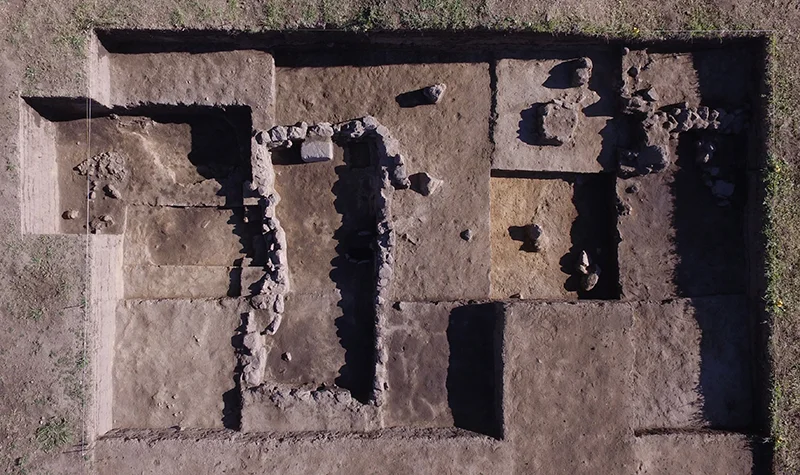
This project examines the levels of heterogeneity, inequality, and collectivity in the rural site of Tlalancaleca, Mexico, during the Late-Postclassic period. Archaeological excavations of domestic and farming areas revealed materials associated with different non-politically integrated city-states, some of them located thousands of kilometers away. This suggests that rural communities in this region possessed a high degree of autonomy, allowing them to maintain long-distance interactions and acquire materials from various communities without direct coercion from an urban center. This challenges the Western idea of rural areas as simple, dependent, and controlled by urban areas. The Postclassic period is known for rapid, sudden social changes that led to political instability. In this respect, it remains necessary to refine chronologies and connect them to broader regional social processes to better understand the transformations of rural communities like Tlalancaleca. Archaeological research in this area has defined cultural phases based on ceramic styles and forms, providing only relative dates. To address this issue, this project aims to provide absolute radiocarbon dates for the Postclassic occupation of Tlalancaleca, obtained from primary contexts. This will be the first study to date the final occupation at this site using high-precision techniques.